Clothing
Your comfort level is the rule.
You may remain fully clothed, keep underwear on, or undress further under the drape. Clothing changes which techniques are practical, not your right to choose.
First Massage Confidence Center
Clothing, bras, private changing, draping, therapist preferences, couples sessions, talking, sleeping, bodies, accessibility, pressure, consent, and stopping, answered plainly.
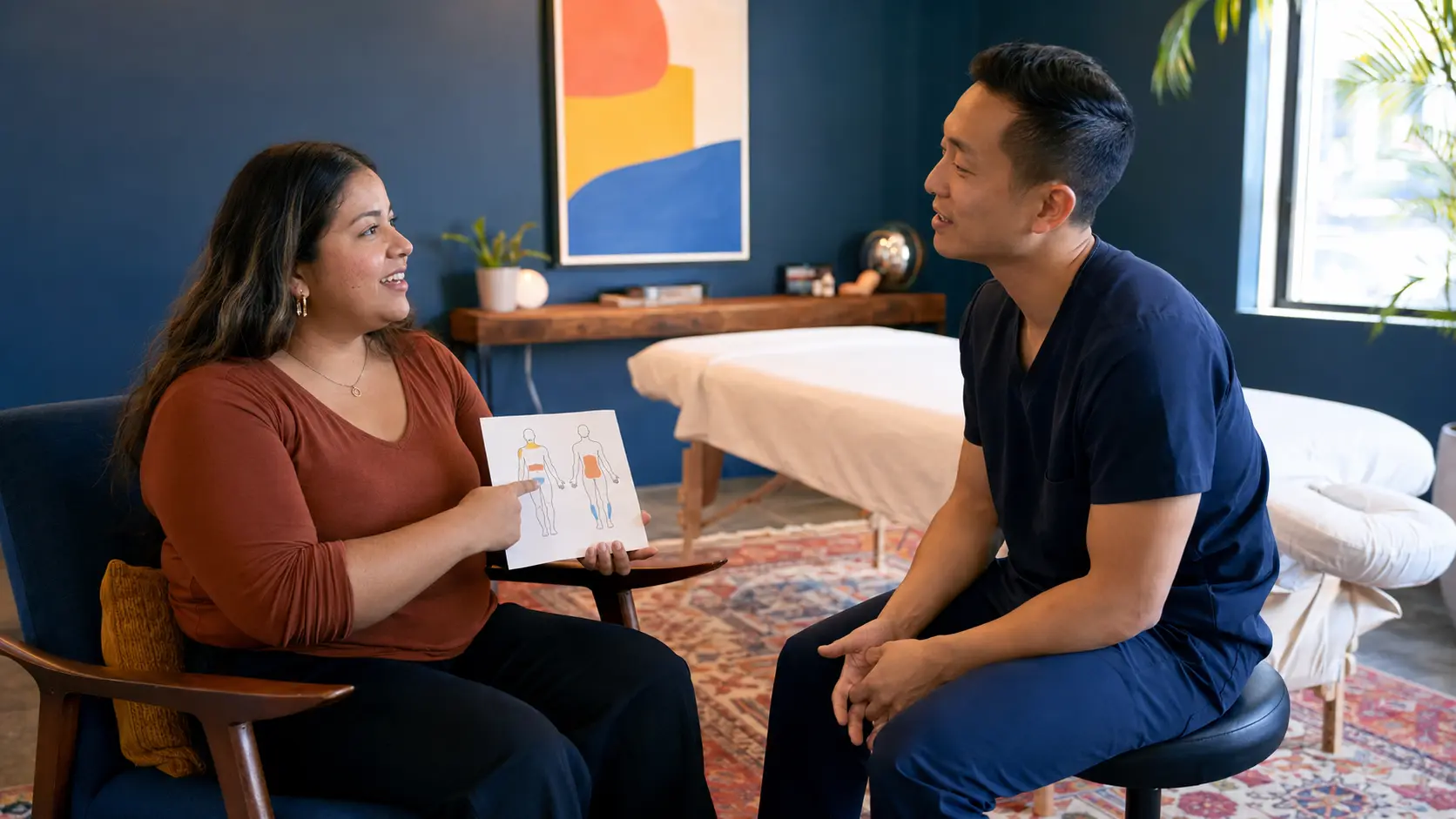
Clothing
You may remain fully clothed, keep underwear on, or undress further under the drape. Clothing changes which techniques are practical, not your right to choose.
Bras
Some clients remove it for easier back work. Keeping it on is equally acceptable, and the therapist should adapt without making the choice awkward.
Therapist preference
The request can be a comfort, cultural, religious, trauma-informed, or personal preference. Availability may change the appointment time.
Couples massage
A familiar person may reduce uncertainty. Each client still keeps separate boundaries, and either person may request a private conversation.
Verify the therapist where regulation applies. Confirm the total price, session time, cancellation policy, setting, and how the practice handles clothing and draping.
Expect an intake and goals conversation. Share only information relevant to a safe session and confirm include, ask-first, and avoid areas.
The therapist should leave. Keep on as much clothing as you want, position yourself as explained, and get under the sheet before they return.
Only the agreed working area should be uncovered. Change pressure, quiet, temperature, position, draping, or the entire plan whenever needed.
The therapist leaves while you dress. Stand slowly, notice how you feel, complete payment, and decline rebooking or products without pressure.
Awkward questions, answered
Plain answers, professional standards, and exact language you can use without apologizing.
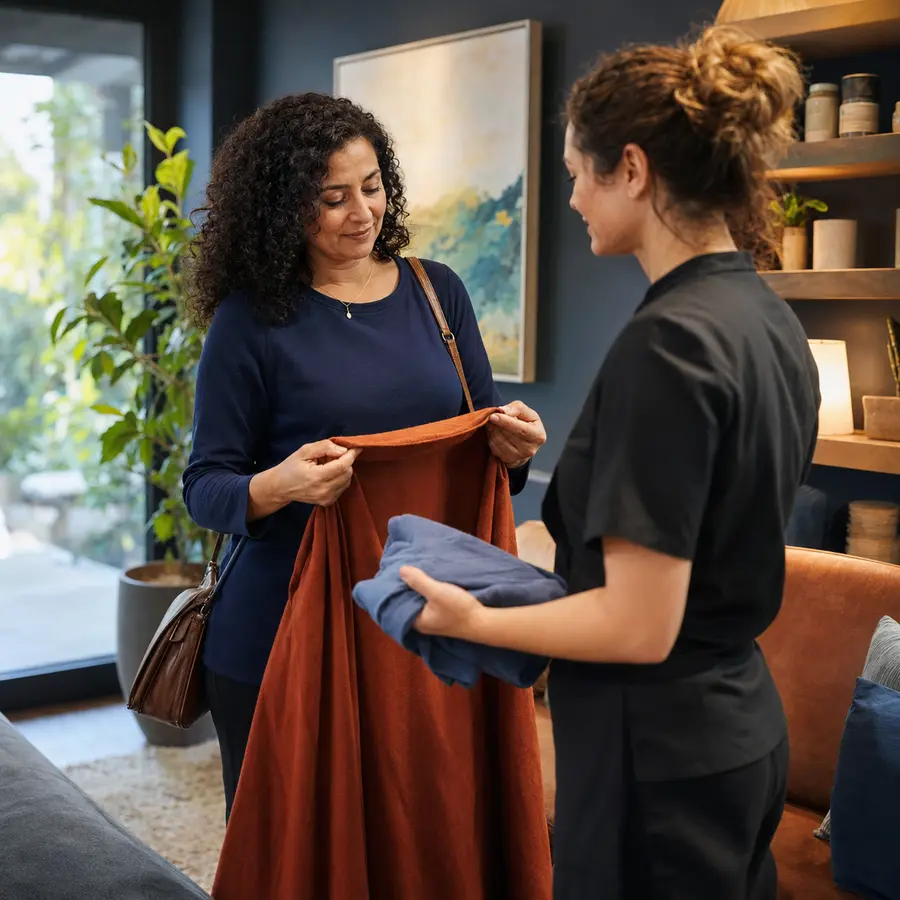
Choose clothing for before, during, and after the appointment.
Read the answer →
Understand fully clothed, underwear, and draped options without pressure.
Read the answer →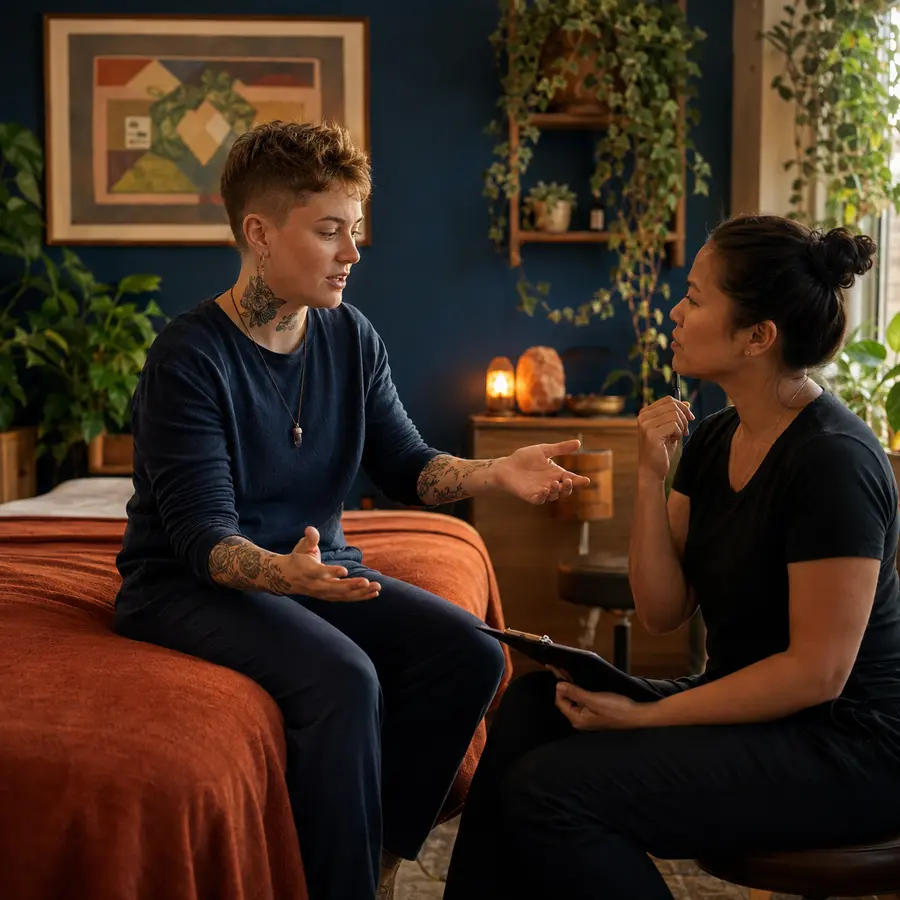
Decide what feels comfortable and know what to say.
Read the answer →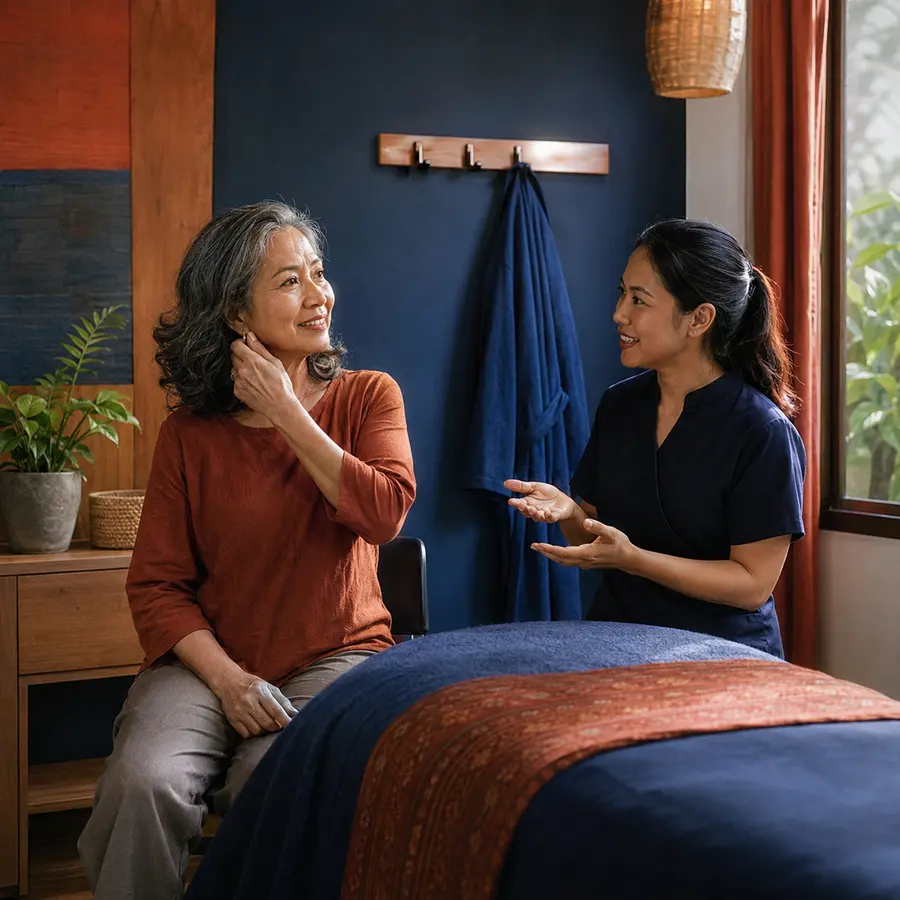
Know the privacy sequence before you enter the room.
Read the answer →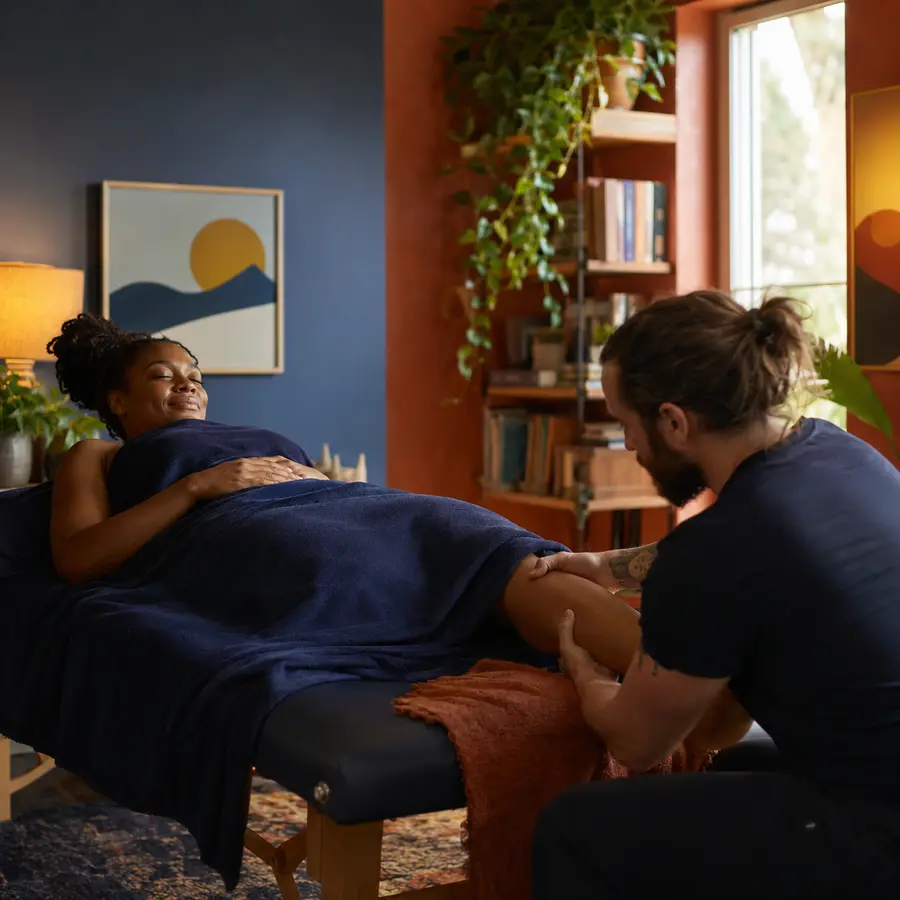
See how a shoulder, back, arm, and leg can be worked while the rest stays covered.
Read the answer →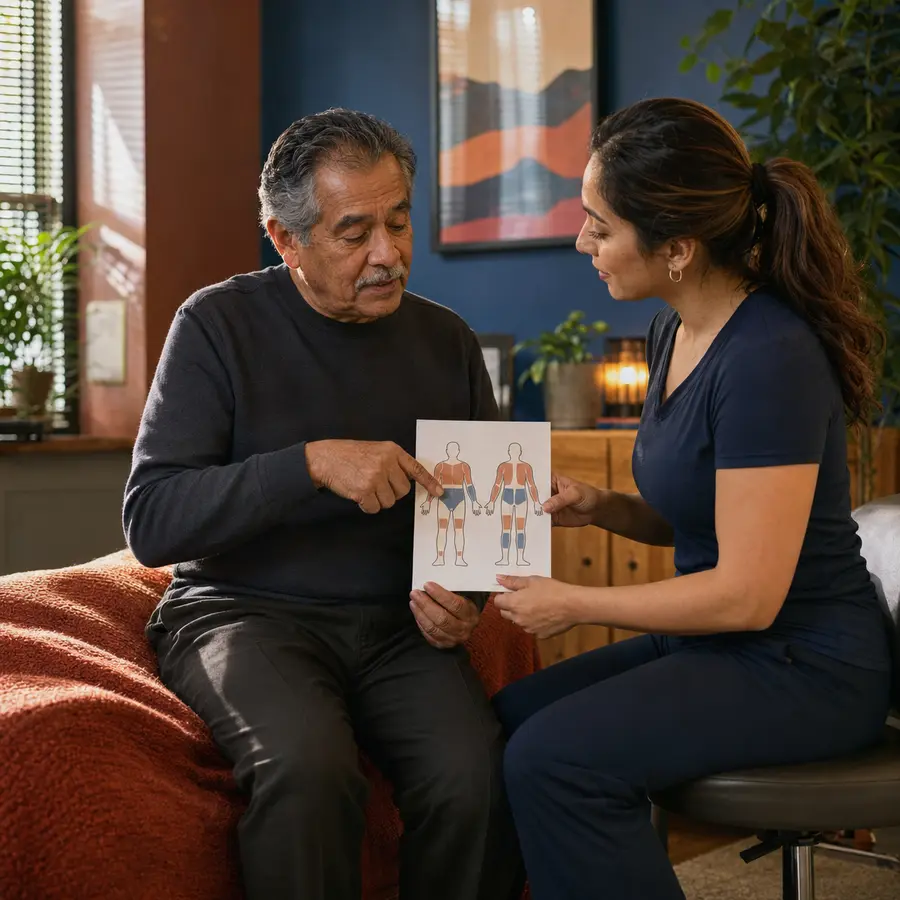
Turn body-area preferences into clear include, ask-first, and avoid instructions.
Read the answer →
Make the request clearly without needing to defend it.
Read the answer →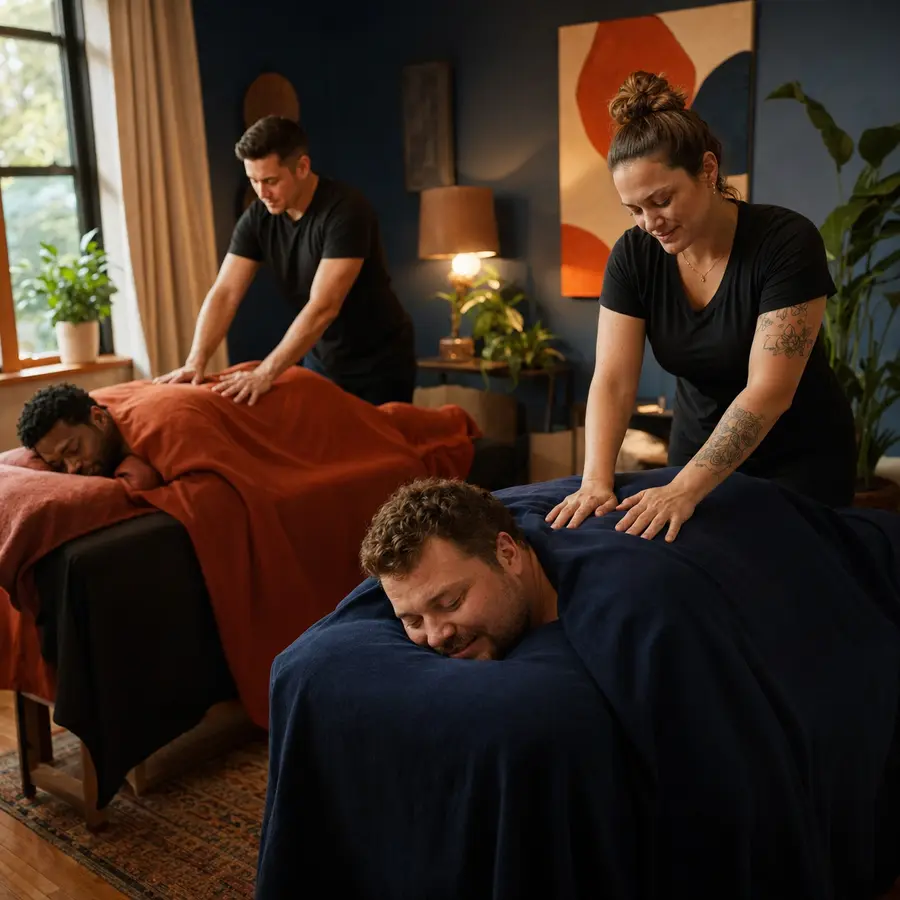
Compare solo and couples sessions using comfort, privacy, and communication.
Read the answer →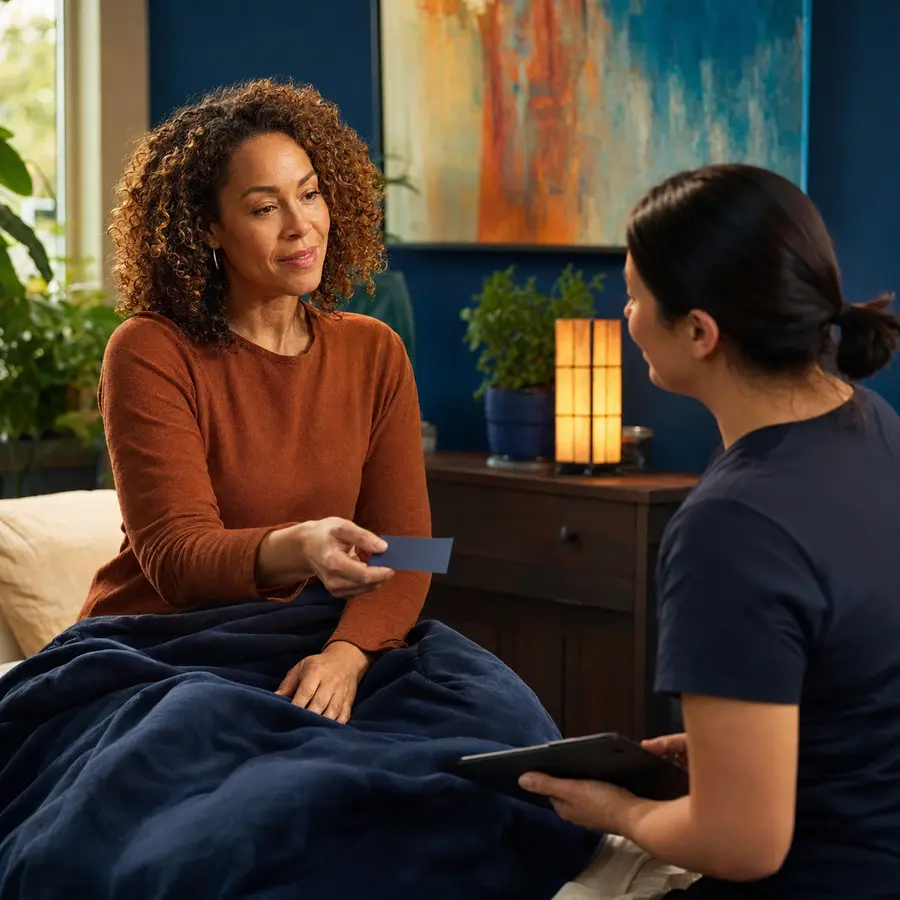
Set a quiet, conversational, or check-ins-only preference.
Read the answer →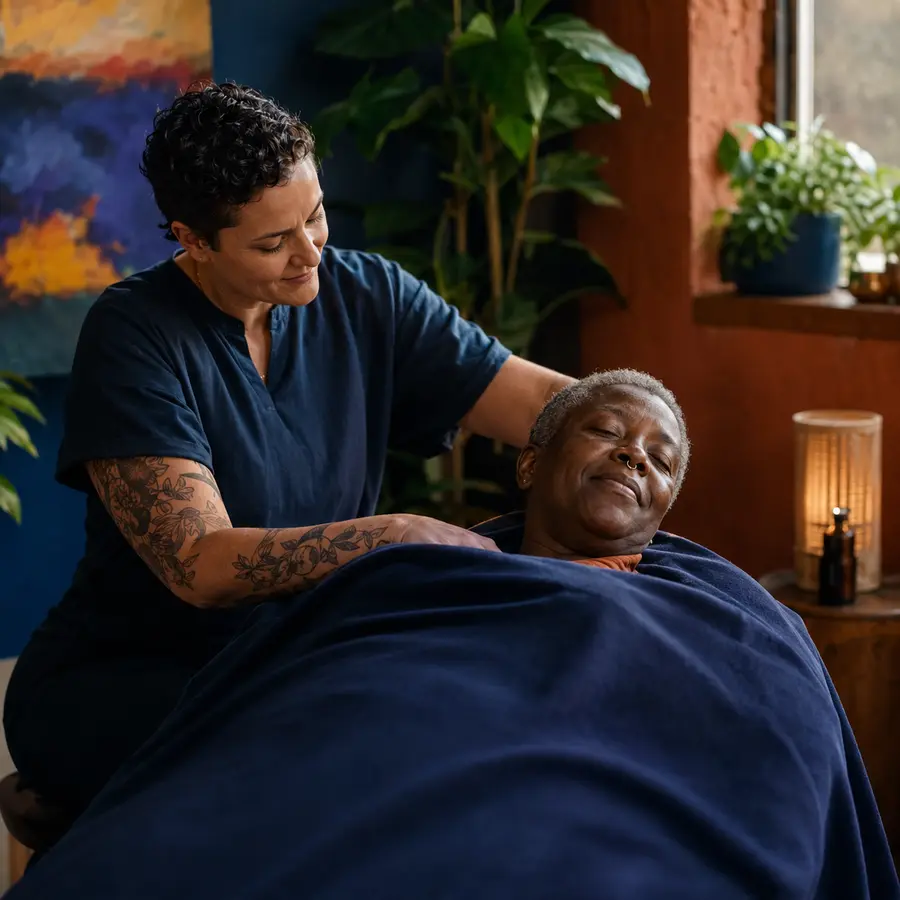
Know what the therapist may need to communicate if you drift off.
Read the answer →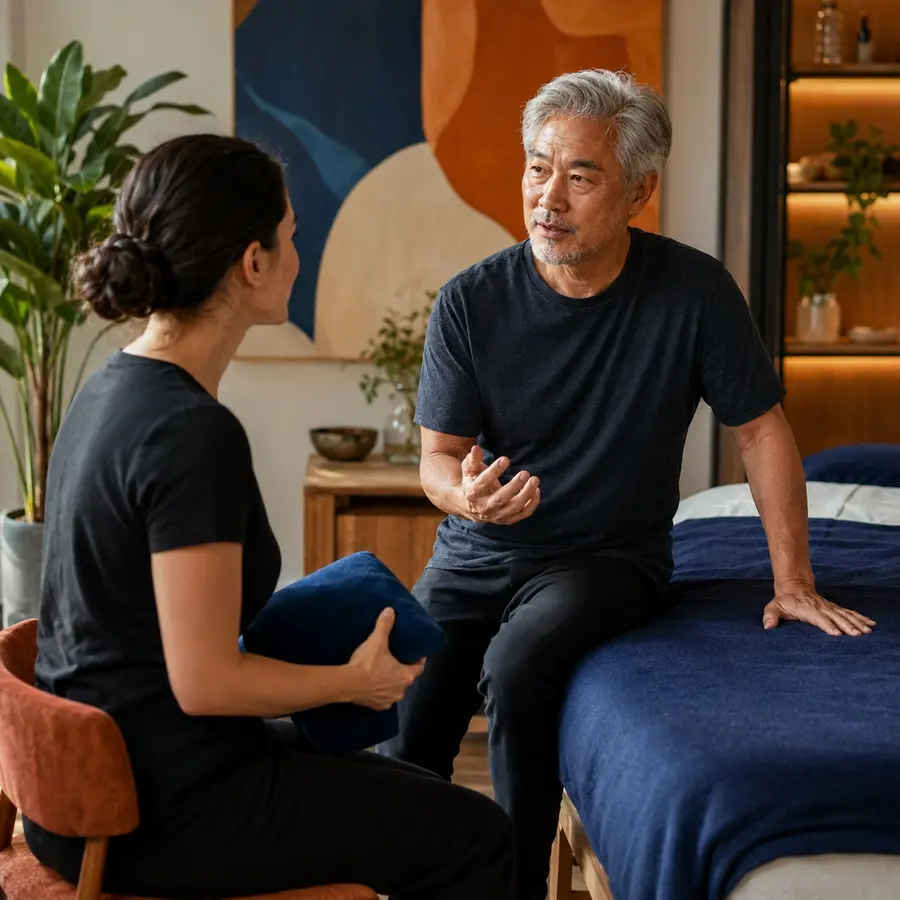
Prepare for positioning and comfort without embarrassment.
Read the answer →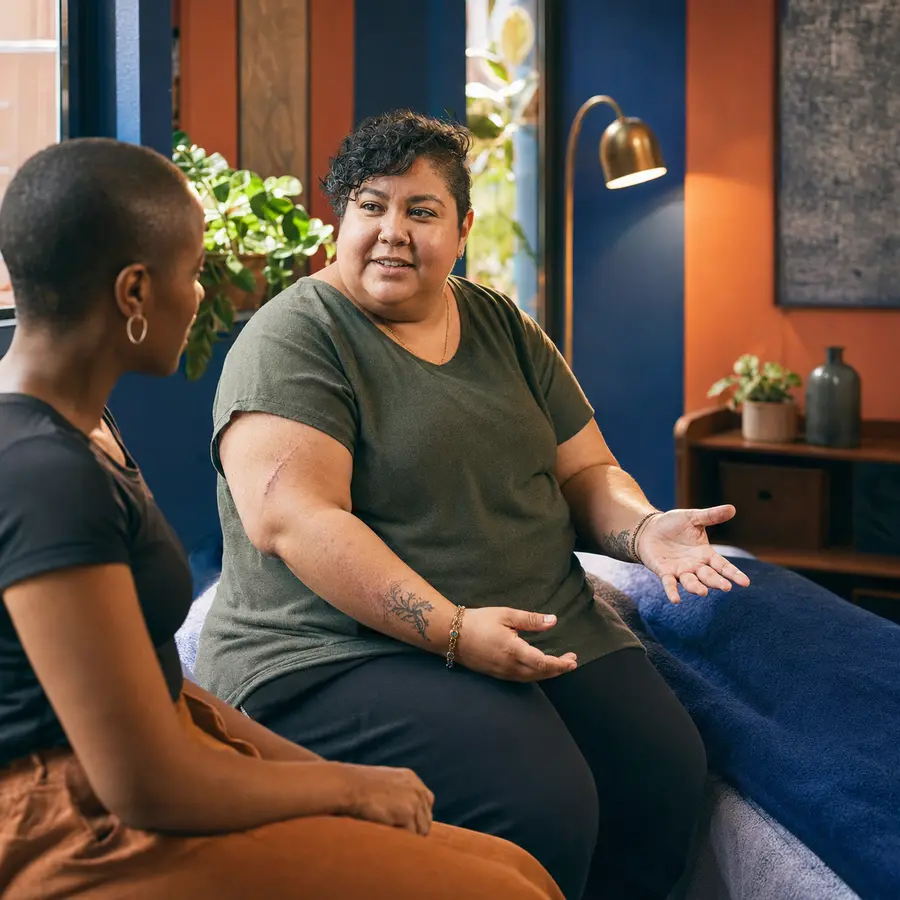
Separate normal appearance concerns from information that affects safety.
Read the answer →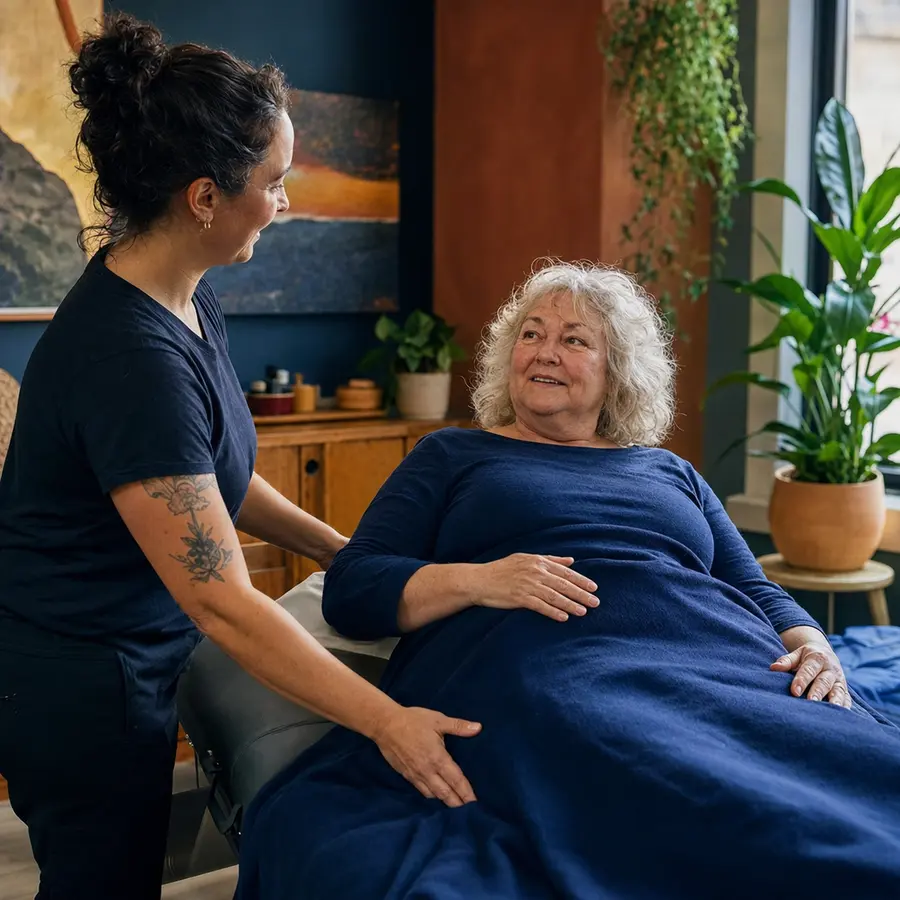
Ask practical accessibility questions before booking.
Read the answer →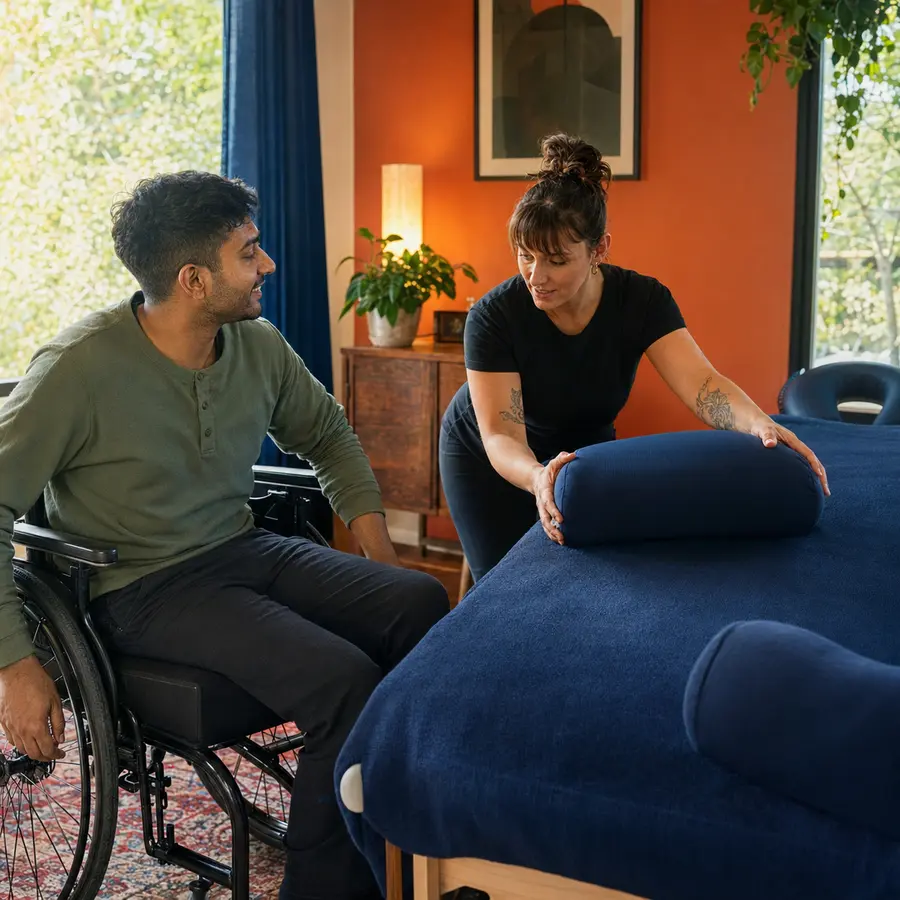
Create a practical access plan before booking.
Read the answer →Real expectations
It happens. The therapist may wake you for a position change or safety check, but a professional should not tease or shame you.
You do not need to shave. Relevant wounds, skin concerns, recent scars, or tenderness are worth mentioning; ordinary appearance is not a problem to solve.
You may keep underwear on, request a restroom break, change position, skip abdominal work, or reschedule according to comfort and symptoms.
Ask directly about table capacity, width, steps, bolsters, side-lying, and room access. A professional practice should answer without shame.
Quiet is not rude. Ask for silence, some conversation, or pressure-only check-ins. You can still speak whenever something needs to change.
AMTA consumer guidance states that clients remove clothing only to their comfort level, the therapist leaves while they undress, and the sheet or towel covers the body except for the part being massaged. Local rules differ.
AMTA: what to expect ↗