01
Access
Ask how the space works, not whether it is “accessible”
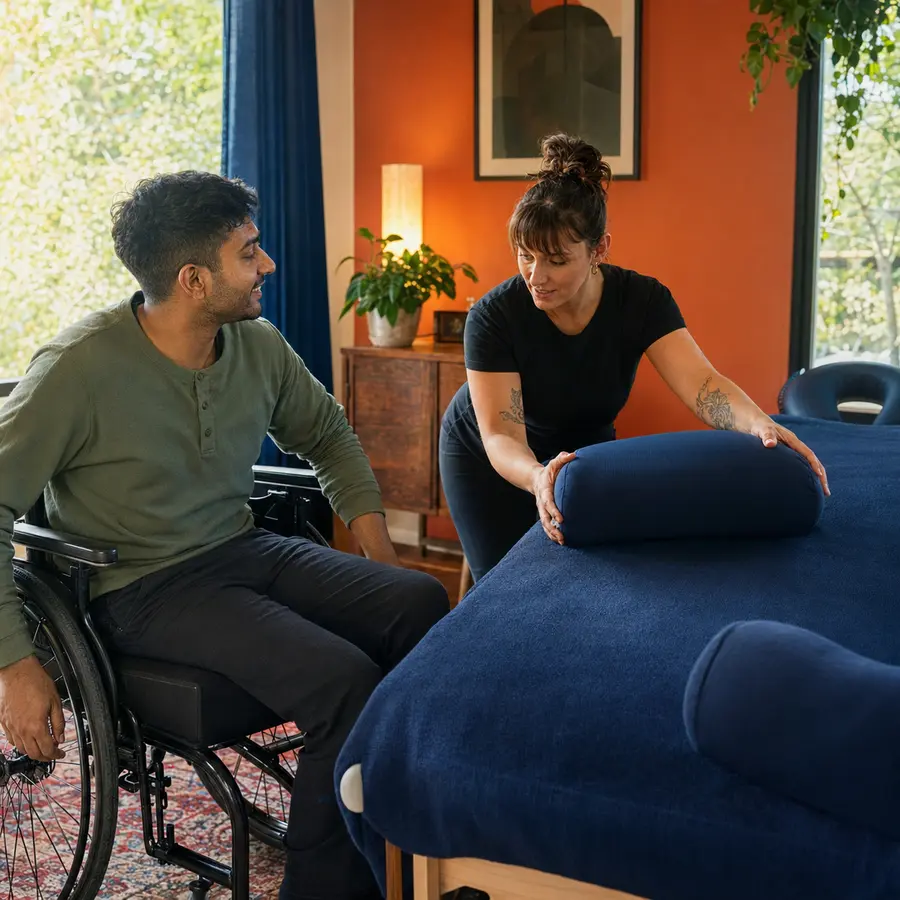
Confirm entrance, parking, restroom, doorway width, table transfer, seating, companion or support-person policy, and where mobility equipment can remain.
- Request measurements when needed
- Ask about transfer assistance limits
- Plan extra time
02
Position
Massage can happen seated, side-lying, or semi-reclined
The safest and most comfortable position may differ from the familiar face-down image. The therapist should work within their competence and your preferences.
- Bring needed supports if agreed
- Use a position you can exit
- Schedule breaks
03
Communication
Build reliable signals
Discuss pain communication, speech or hearing access, sensory needs, processing time, a support person, and how consent will be checked. Avoid making the client repeatedly prove the need.
- Use a written preference card
- Confirm how to stop
- Allow extra response time