Context is not instruction
The main photograph shows who is doing what and from where. It never has to carry the movement lesson by itself.
18 cinematic, staged sequences
Cinematic photography shows the human setup. Staged three-step plates show where contact begins, what stays supported, and how each sequence ends. Every routine also explains pace, pressure, avoid areas, mistakes, and exact stop conditions.
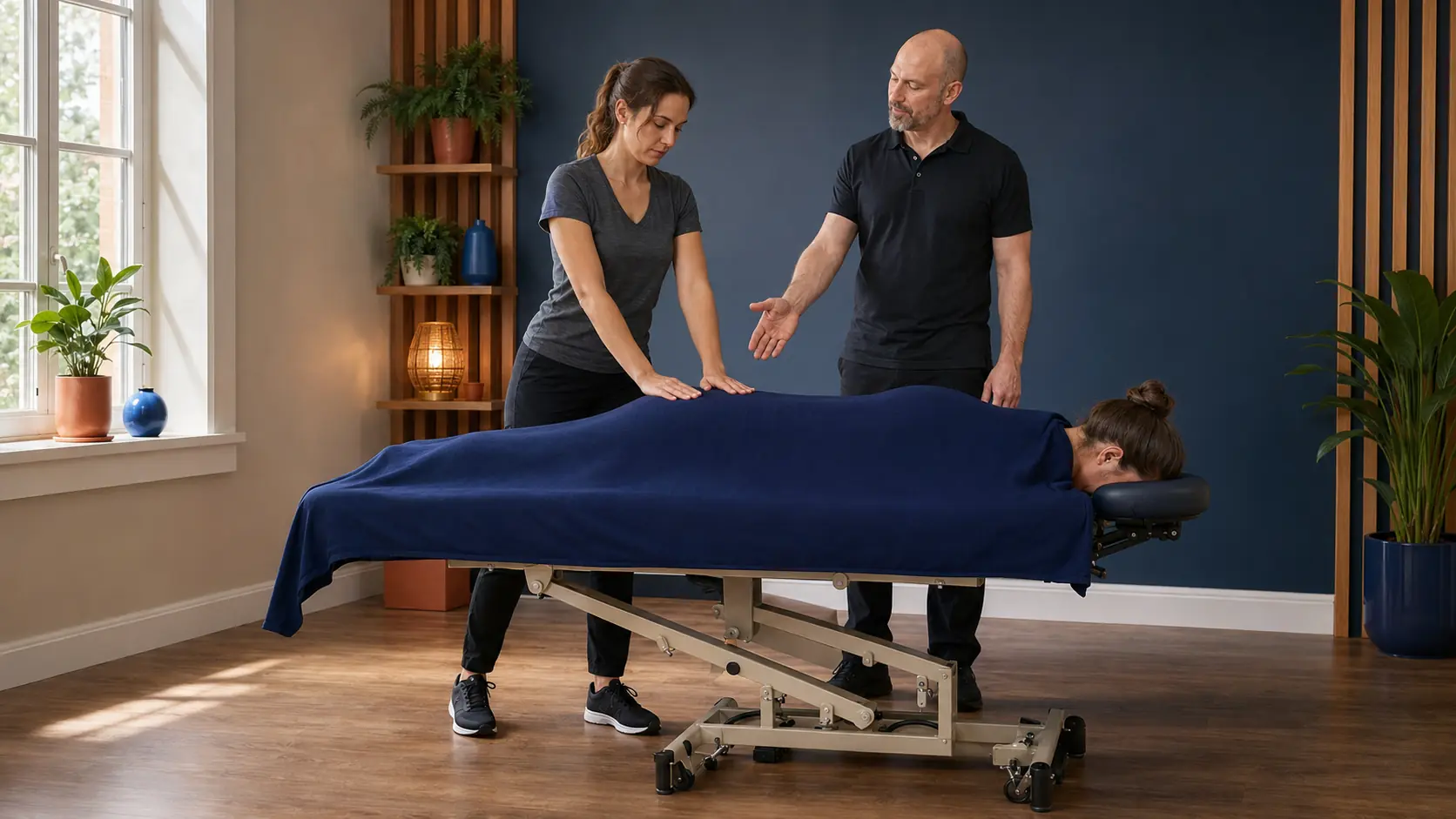
The main photograph shows who is doing what and from where. It never has to carry the movement lesson by itself.
Each staged sequence makes support, contact, and the finish position visible before you try the first pass.
Every routine begins with screening and names symptoms, reactions, or requests that end it immediately.
The visual contract
A beautiful image can still teach the wrong thing. Massage.how separates the jobs: the hero photograph establishes a believable position and relationship, while the staged teaching plate makes each step visible. If either conflicts with the written cue, the routine does not pass review.
Self · Hands
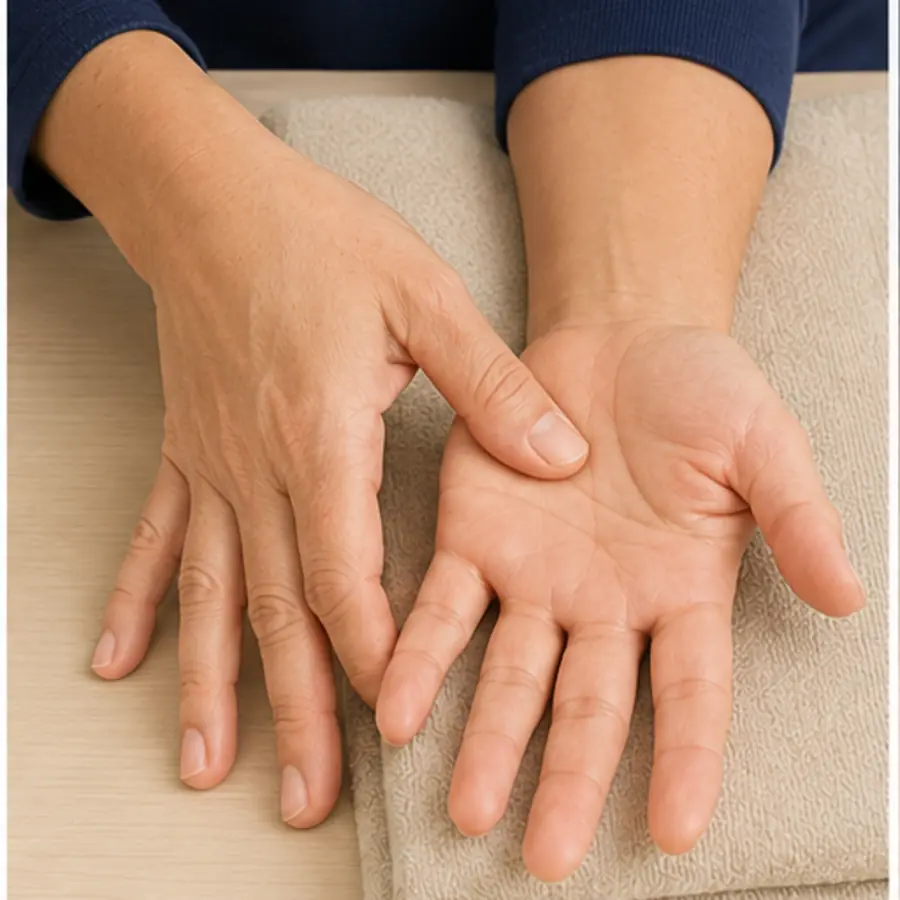 Cinematic context photo
Staged teaching sequence
The selected step is outlined in coral. The text below is the source of truth for pressure, boundaries, and stop conditions.
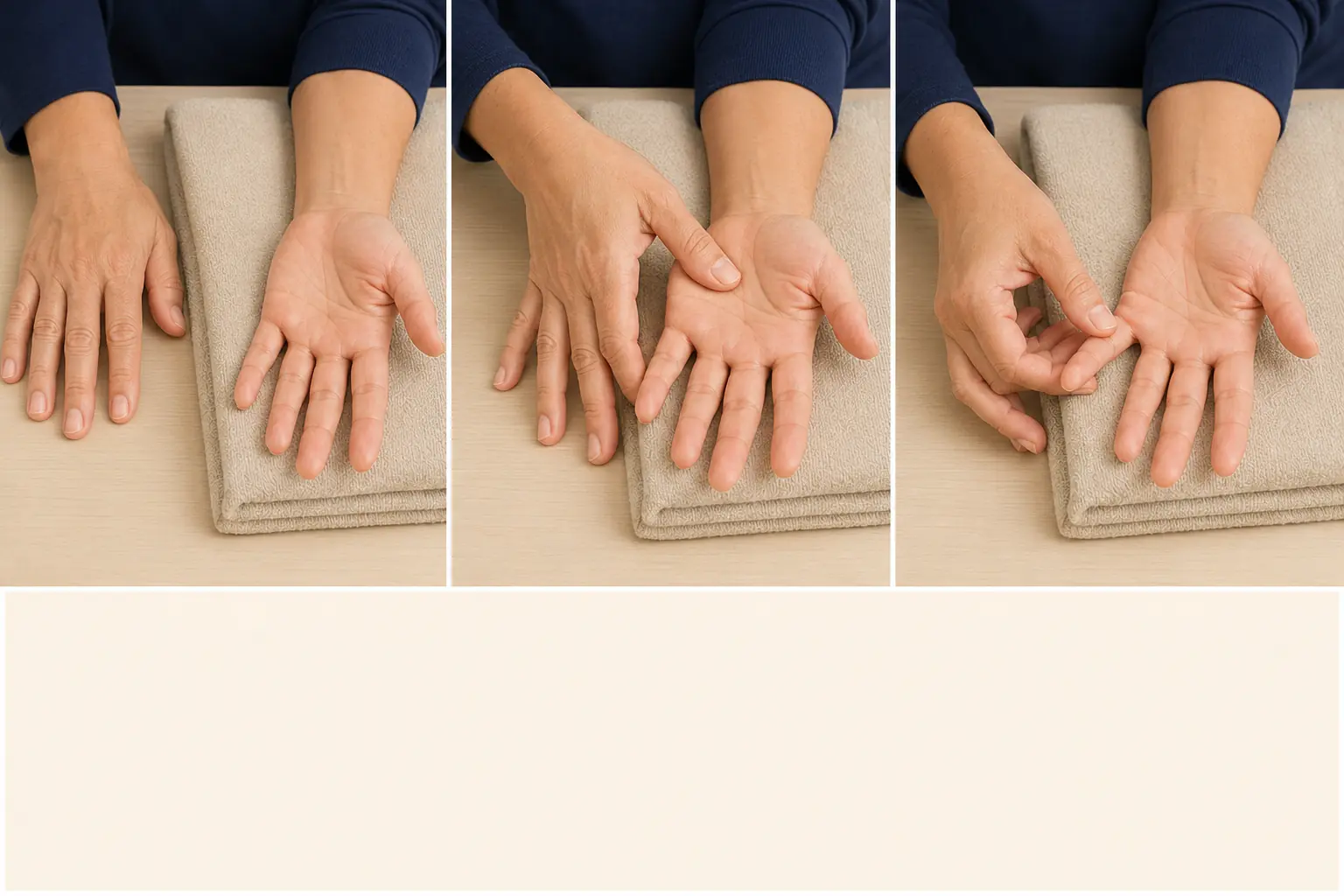
Rest the forearm and hand. Open and close the fingers through a comfortable range.
Inflamed joints, open skin, recent injury
Pulling finger joints or digging into numb areas
Sharp, electric, burning, numb, weak, swollen, or worsening symptoms
Open and close the hand slowly with no pressure
Before contact
Scope: These photographic sequences are general education, not clinical training or a substitute for individualized care. Visual integrity and page-to-image accuracy are reviewed separately from professional technique accuracy. Safety framing follows the conservative principle that massage risk rises with vigorous pressure and with conditions that increase vulnerability. Review NCCIH's massage safety overview ↗
Know which lane you are in
Stable positions, light pressure, broad contact, and movements you can stop instantly. Persistent or concerning symptoms need appropriate evaluation, not harder pressure.
Keep the person clothed, use simple non-clinical contact, agree on signals, and stop for any request, flinch, breath-holding, pain, or uncertainty.
Body-mechanics sequences support supervised education. They do not authorize clinical practice, establish scope, or replace instructor feedback.