Light
Skin and surface tissue move comfortably. Breathing stays easy.
Self-massage
Choose a lower-risk body area and follow a timed sequence with gentle pressure cues, clear limits, and an equipment-free alternative.
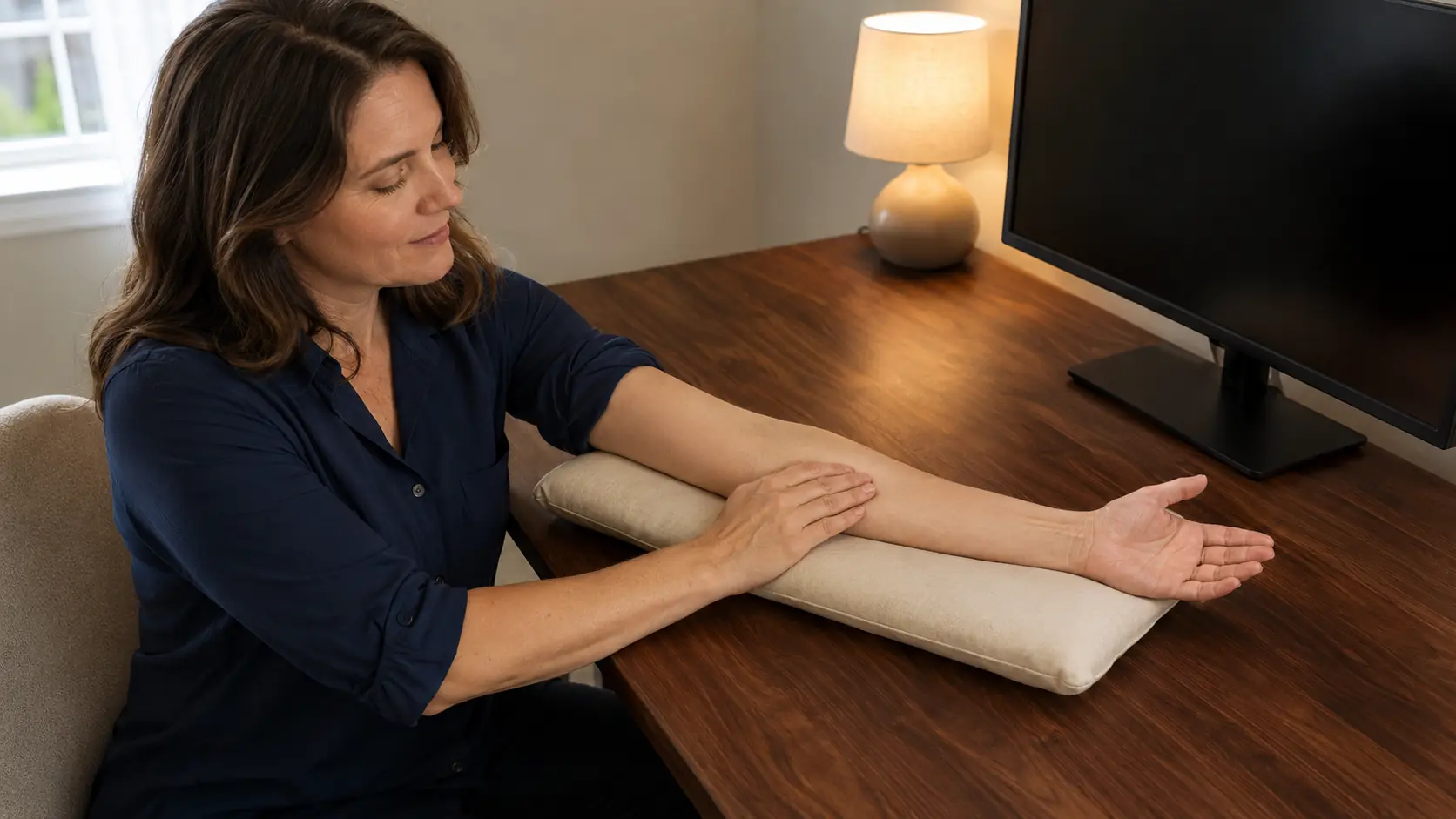
Pressure guide
Skin and surface tissue move comfortably. Breathing stays easy.
Clear pressure without bracing, holding your breath, or wanting to pull away.
Sharp, burning, electric, numb, nauseating, or worsening sensations are stop signals.
Self-massage routine
Rub your palms together, then lightly glide over the palm and back of one hand.
Pressure should feel easy and calming.
Avoid: Skip broken skin, new swelling, numbness, or sharp pain.
No-tool or lower-pressure option: Warm your hands and slowly open and close them without pressure.
Avoid direct pressure on the spine, front and side of the neck, joints, wounds, swollen areas, and sharp bony edges.
More pressure is not automatically better. Stop rather than trying to force a knot, release tissue, or push through symptoms.
Notice how you feel later the same day. Do not repeat a routine on an area that becomes more painful, swollen, numb, or irritated.