01
Purpose
Coverage is a professional boundary
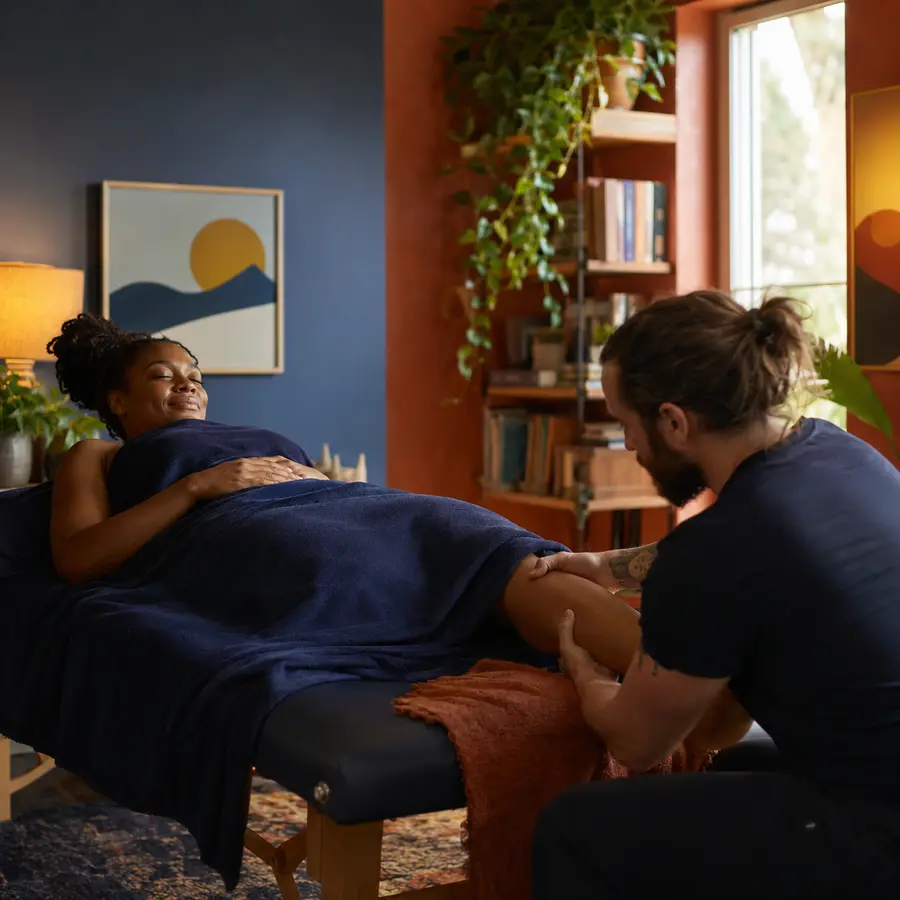
A sheet, towel, blanket, or clothing creates privacy and warmth. The drape should not expose unrelated areas or depend on the client holding it in place.
- Only the working area is uncovered
- Genitals stay covered
- Ask for an extra blanket or towel
02
Movement
The therapist manages the sheet, not your body
The edge is secured before a limb or area is uncovered, and the area is covered again before moving on. Position changes should be explained before they happen.
- Expect a verbal cue before turning
- Request less exposure
- Ask to remain in one position
03
Consent
Draping can be adjusted immediately
Say “Please cover more of my leg,” “Keep my shoulders covered,” or “I want to stop.” A competent therapist should respond without argument.
- More coverage is always an option
- Skip any area
- End the session if the boundary is ignored