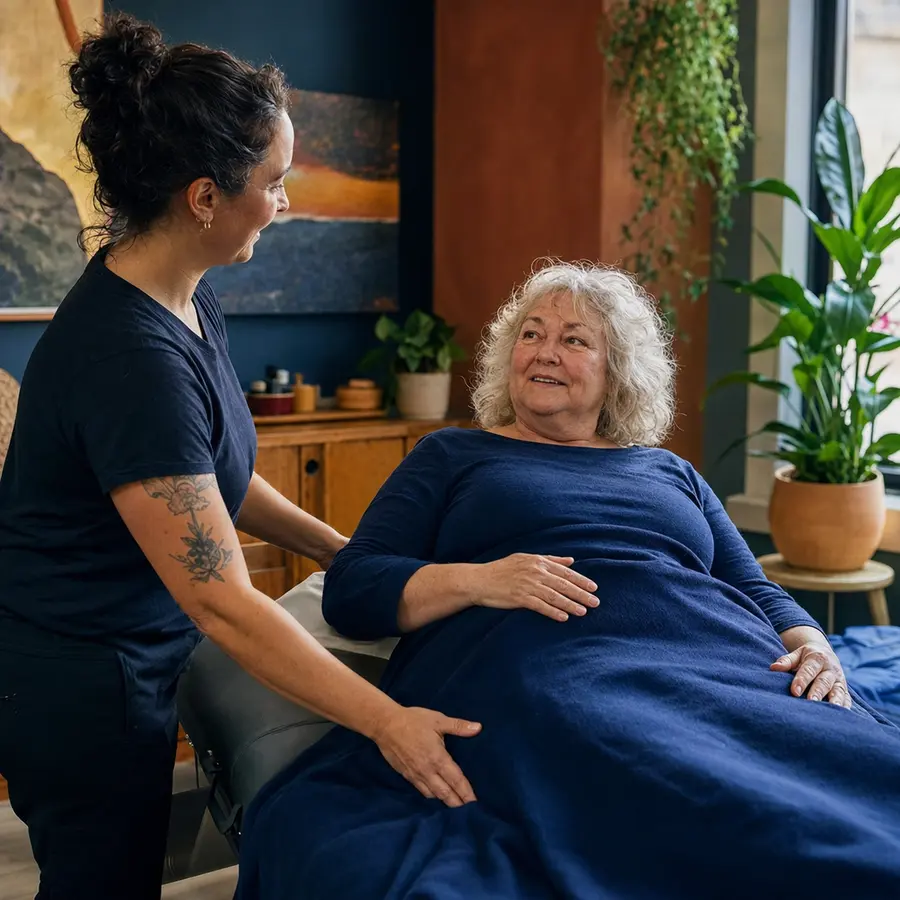
01
Before booking
Ask about equipment directly
Table working capacity, width, height, step access, room space, and bolsters affect comfort and safety. A provider should answer without vagueness or embarrassment.
- Ask for the table capacity
- Request a wider table or supports
- Confirm room accessibility
02
Positioning
Side-lying and semi-reclined options can help
Face-down positioning is not required for every session. Pillows, bolsters, side-lying, seated, or semi-reclined work may reduce strain or breathing discomfort.
- Choose a position you can leave easily
- Request breaks
- Change position when needed
03
Respect
Size is not consent for weight-loss claims
Massage should not be marketed as fat removal, detoxification, or body correction. The session should stay focused on the goals you chose.
- Reject unsolicited weight advice
- Ask for neutral language
- Leave if you are shamed