01
Before booking
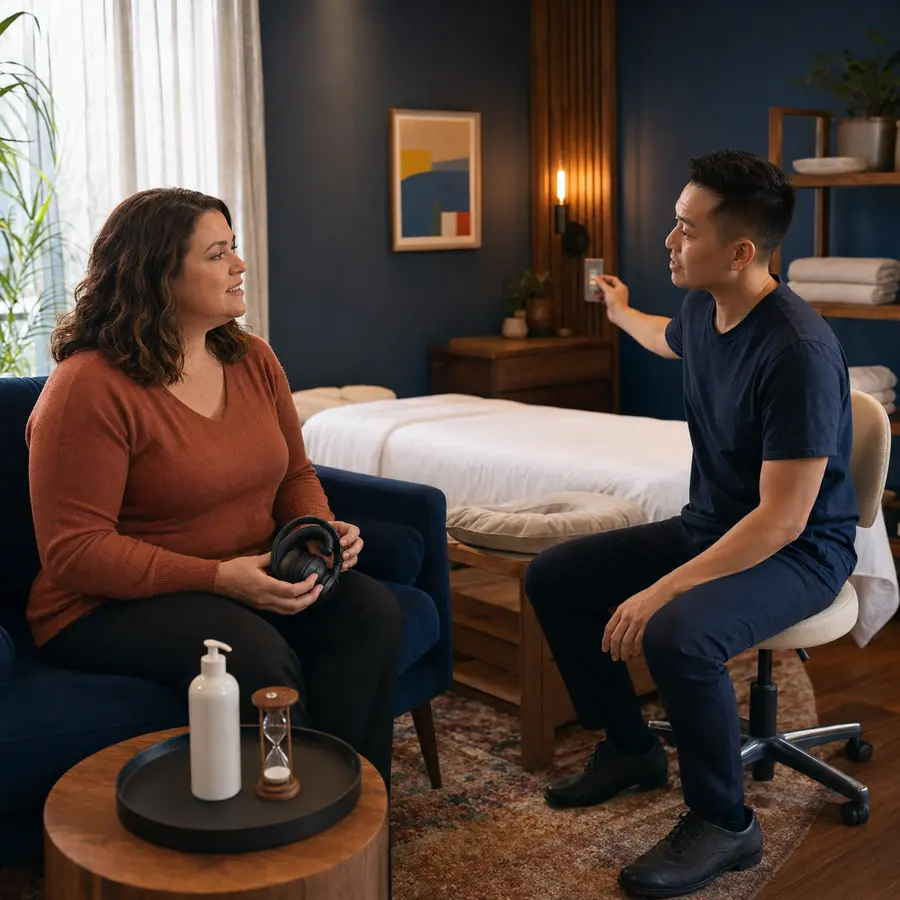
Ask about the environment
Request concrete details about stairs, waiting areas, music, scents, lighting, face cradles, temperature, and the ability to remain clothed.
- Ask for photos if useful
- Confirm fragrance-free options
- Ask whether a support person can attend the intake
02
Build a predictable sequence
Reduce surprise
Ask the therapist to explain the order of the session, request permission before changing areas, and warn you before temperature, sound, or position changes.
- Agree on a check-in style
- Choose talking, quiet, or minimal cues
- Use side-lying or seated positioning if preferred
03
During the session
Changing the plan is allowed
You can ask to keep clothing on, skip an area, adjust the room, or stop. Comfort is part of the plan, not a disruption to it.
- Use a hand signal if speech is difficult
- Keep communication cards within reach
- Leave without apologizing if boundaries are not respected